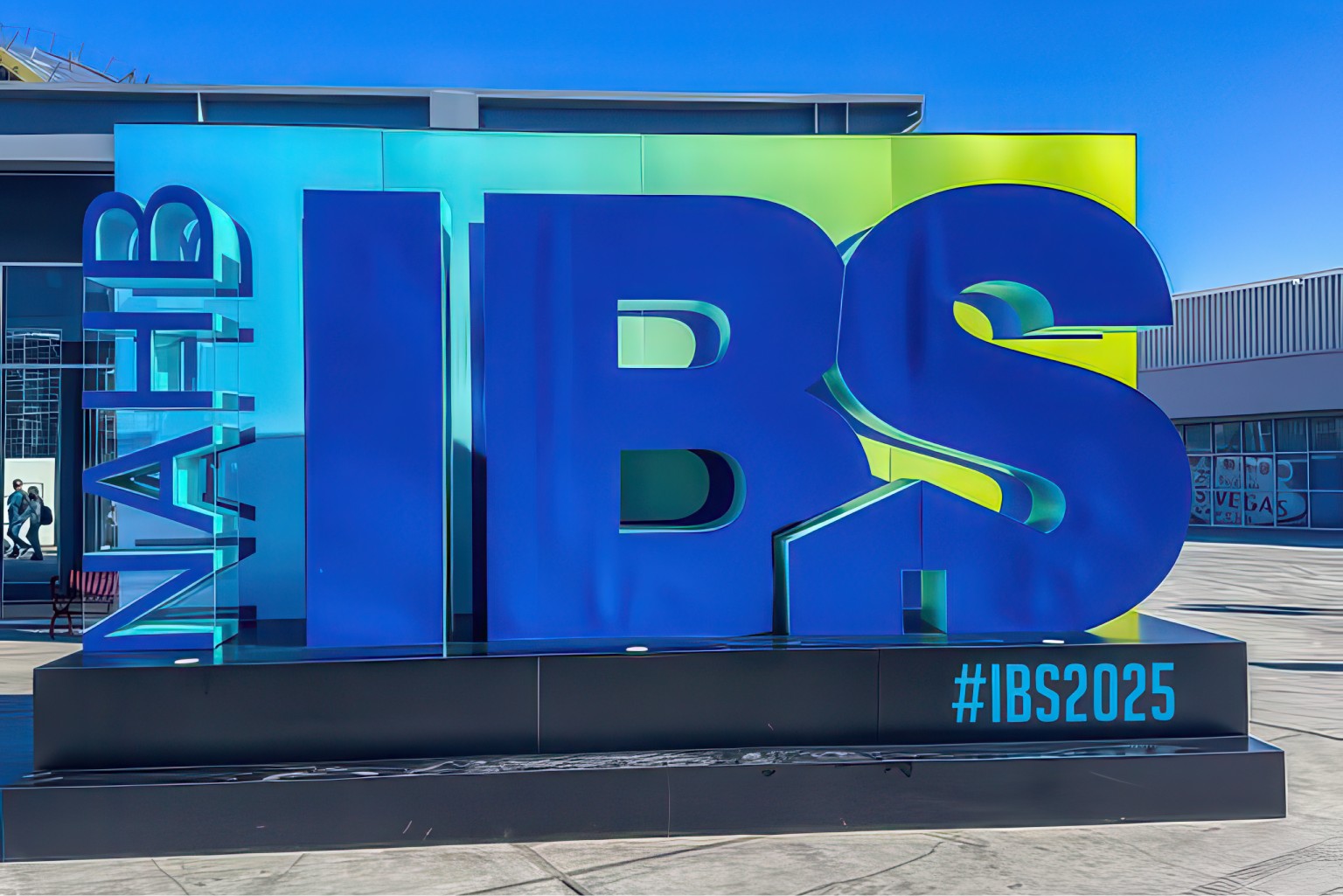


ConExpo 2026: The Push Downstream, Smarter Safety, and the Dealer Channel Bottleneck

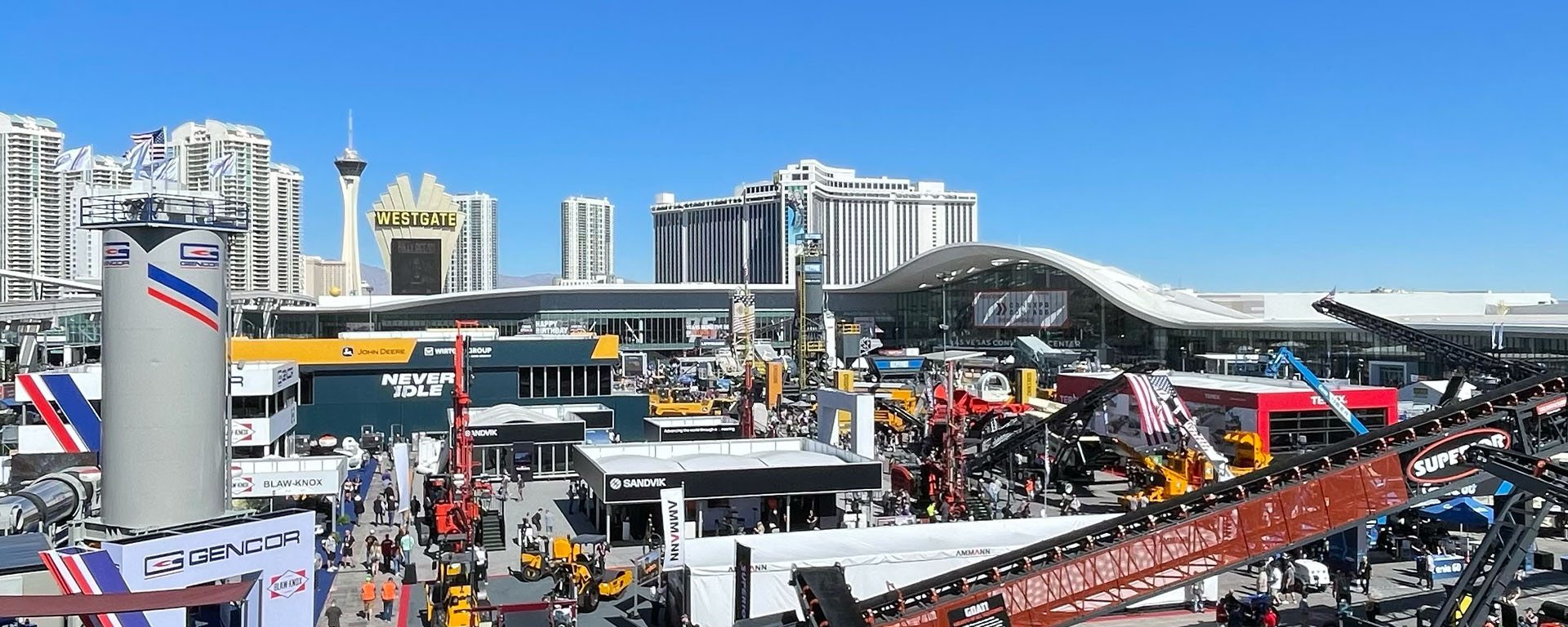
Walking the floor at ConExpo 2026 in Las Vegas, the energy felt electric.
Yes, costs are up. Gas, electricity, and inputs are pushing on margins. But almost every conversation I had — with OEMs, dealers, and software platforms — pointed to a pipeline of work that has the industry leaning forward. Federal broadband buildouts, infrastructure spending, and a renewed appetite for compact and on-demand machinery are giving manufacturers a tailwind that, for once, is harder than the headwind.
But underneath the optimism, the same three questions kept surfacing:
- How do we reach a customer we've historically ignored?
- How do we get smarter about safety and uptime without overwhelming the operator?
- And how do we get any of this through a dealer channel that varies wildly from region to region?
Here's what the brands at the front of the pack are doing about it.
1. The Race Downstream Is On
For decades, the major heavy equipment manufacturers built their go-to-market around large contractors and big fleet operators. That is changing fast. Multiple OEMs at the show talked openly about chasing the small contractor: the one-to-five-vehicle landscaper, the solo excavator operator, the weekend warrior who decided to start a side business this year and now needs a skid steer. It's a meaningful strategic shift, and it's happening across the category at the same time.
The why is straightforward. Compact equipment is a fast-growing segment, the workforce coming into the trades skews independent and small-shop, and the lifetime value of capturing these operators early (before they pledge loyalty to a competitor brand) is too good to ignore.
The how is harder. New product lines designed specifically for the smaller operator. Local dealer enablement around service, pick-up, and adjacent product categories the OEM doesn't even make. Online inventory portals that show live dealer stock and route finance-qualified leads directly into the local relationship.
THE BRAND TAKEAWAY
The unanswered question is the discovery problem itself. As one OEM put it bluntly: how do we even find the person who woke up this morning and decided to be a landscaper? That's a marketing and media question every player in this space is going to be wrestling with for the next 24 months, and the brands that solve it first will own a customer segment that previously didn't even exist on their org chart.
2. AI on the Job Site Is Pragmatic, Not Futuristic
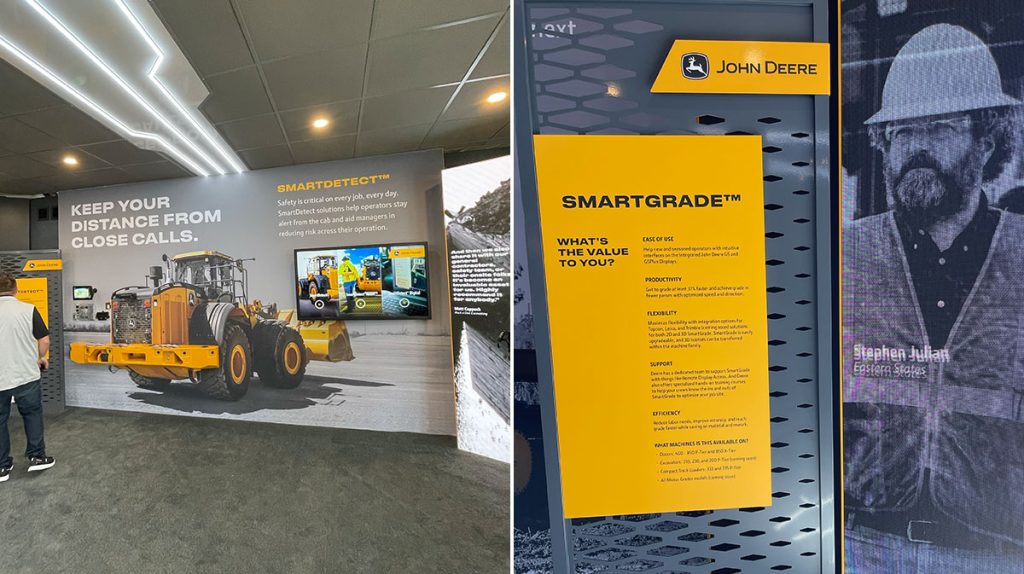
If you came to ConExpo expecting hype about autonomous machines and AI-driven job sites, you would have been disappointed. The actual AI story on the floor was much more grounded and much more useful:
- Pedestrian detection systems that warn operators of people in the blind spot.
- Sensors that confirm both hands are on the controls before the machine moves.
- Mandatory operator walk-throughs that adapt based on whether the user is a seasoned pro or a first-time renter.
- Tracking integrations that flag misuse or monitor uptime, and alert owners when an asset has gone somewhere it shouldn't.
The throughline is risk reduction for the operator, for the asset, and for the owner's bottom line. Theft prevention and hours tracking came up in nearly every telematics conversation, often before efficiency or productivity did. The math is simple: as more equipment moves into the hands of less-experienced operators, the surface area for accidents, downtime, and shrinkage grows. AI-assisted safety and asset protection are how the industry is trying to absorb that risk without slowing the downstream push.
THE BRAND TAKEAWAY
This is where the heavy equipment AI story diverges from the rest of the tech world. It isn't about replacing the operator. It's about quietly making sure the operator finishes the day with the machine, the worksite, and themselves intact.
3. From Broadband Trenches to the Moon: A Pipeline With Range
The macro context behind all of this is worth pausing on.
The federal Broadband Equity, Access, and Deployment program is funneling tens of billions of dollars into rural connectivity infrastructure, and that work is showing up directly in OEM order books. Trenchers, drills, and compact excavators specifically built for fiber deployment had a notable presence on the floor.
At the other end of the spectrum, at least one manufacturer is showcasing equipment being adapted for lunar excavation. That's not a real revenue line yet, but it tells you something about where the engineering ambition is sitting.
THE BRAND TAKEAWAY
The point isn't the moon. The point is that heavy equipment, after years of being treated as a slow, mature category, is suddenly being pulled in multiple directions at once: broadband, infrastructure, energy transition, residential resilience.
The manufacturers who can flex across those use cases are going to come out of this cycle in a dramatically stronger competitive position than the ones who try to ride a single demand wave.
4. The Dealer Channel is Still the Choke Point
For all the talk of new products, new operator segments, and new technology, the perennial bottleneck in this industry hasn't changed: the dealer channel.
Every OEM at the show is investing in tools, including:
- dealer-facing portals
- lead-routing platforms
- inventory visibility
- training programs to make their distributors more effective
Many are running formal dealer leadership programs, with incentive trips and exclusive resources for top performers.
But the structural challenge is the same one it's been for years. Dealer networks vary enormously in capability, geography, brand sophistication, and willingness to adopt new tools. Pushing consistent messaging and materials through a fragmented channel, all to reach an even more fragmented end customer, is the marketing problem nobody has fully solved. The brands that crack it will not necessarily be the ones with the best machines. They will be the ones who treat dealer enablement as a core marketing competency, not an afterthought.
There's a quieter education gap underneath all of this, too. New product managers are stepping into the heavy equipment category from adjacent industries with very little internal onboarding to lean on. Newer operators are buying their first machines without ever having sat in one.
THE BRAND TAKEAWAY
The brands that build for that learning curve at every level of the category (from the dealer rep to the end user) will have a meaningful advantage over the ones who assume the market already knows what it's doing.
Final Takeaway: The Category is at an Inflection Point
ConExpo 2026 didn't surface one giant new trend. It surfaced an industry quietly repositioning itself in three directions at once:
- toward a smaller, less experienced customer
- toward smarter, safer, more connected machines
- toward a more capable dealer channel that can reach both
The optimism on the floor was real, and earned. The pipeline is strong. The technology is maturing.
The brands that will define the next few years aren't the ones with the flashiest booth. They're the ones figuring out how to find a one-truck landscaper, sell them a compact machine through a local dealer, and keep them safe and productive long enough to become a five-truck customer.
Whoever solves that loop first wins.

Brian Gee

Subscribe for
more Slant
This site is protected by reCAPTCHA and the Google Privacy Policy and Terms of Service apply.