

The 6 Forces Roiling Market Research, and What to Do Now


The market research industry is in the middle of its most consequential reset in a generation, and most marketing leaders are still operating like it’s 2019.
Synthetic respondents are quietly contaminating survey panels.
AI is rewriting how consumers discover, consider, and buy. GLP‑1 medications are erasing 141 million food and beverage moments per day.
Trust in major institutions has cratered.
The “fast and cheap” insights bargain that fueled the last decade of brand decisions is buckling under the weight of its own assumptions.
This is not a moment for incremental adjustment. Marketers who treat the next 24 months as business‑as‑usual will find themselves making decisions on data that’s contaminated, surface‑level, or already obsolete by the time the deck is built.
The brands that win the next era will not be the ones with the biggest research budgets — they will be the ones with the courage to admit what their old playbook can no longer tell them, and the discipline to build a new one before the market forces the issue.
Drawn from the front lines of the 2026 Quirk’s Marketing Research and Insights conference, this paper distills six trends that should be on the agenda of every marketing leader before the next planning cycle. Each is paired with a clear‑eyed marketer takeaway. None of them are hype. All of them are already reshaping which brands grow and which ones quietly fade off the Fortune 500 list — where, by the way, 89% of the 1950s cohort no longer appears.
If your insights team is still framing its job as “delivering reports,” your competitive disadvantage is already compounding. Read on.
TREND 1: Stop Asking Consumers Why. They Don’t Actually Know.
For decades, marketers have built campaigns on the rational answers consumers give in surveys: “good quality,” “fair price,” “superior performance.” These answers feel logical, defensible, and easy to put in a deck. They are also, at best, half the story — and at worst, a complete decoy. The drivers that actually move purchase behavior live in the subconscious, and they are almost never what consumers say out loud when you ask them why.
Indeed learned this the hard way. After two decades as the dominant force in hiring, the brand watched its market position crater between 2023 and 2026 as generative AI and a tightened job market reshuffled the category. When the team dug past System 2 (the rational, articulate brain) into System 1 (the subconscious, emotional one), they discovered that job seekers weren’t choosing platforms based on durability or price‑equivalents. They were choosing based on whether the experience made them feel competent, empowered, secure, and like they belonged. Using metaphor elicitation and narrative inquiry across roughly 2,100 respondents, Indeed quantified nine emotional motivations driving the category — and built the biggest brand transformation in its 20‑year history on top of them.
The implication for CMOs is uncomfortable: most of your brand strategy is built on rationalized consumer responses that have very little to do with why people actually buy. If your tracker only measures functional perceptions, you are flying blind on the drivers that move share. The good news is that behavioral science methodologies — once expensive and qualitative‑only — can now be deployed at quant scale, giving you the emotional fingerprint of your category and a defensible map of where your brand can credibly own ground competitors cannot.
MARKETER TAKEAWAY
Stop building campaigns on what consumers can articulate. Build them on what they cannot. Audit your brand tracker for emotional drivers, not just functional ones — and if it doesn’t measure them, replace it.

TREND 2: Synthetic Personas Are a Brilliant Sidekick — and a Dangerous Stand‑In
Synthetic respondents are the shiniest object in the research toolkit right now, and the hype is outrunning the reality. Instant, infinite, on-demand consumer panels powered by AI. An irresistible promise for budget-strapped insights teams under pressure to move faster.
The problem? The technology is both genuinely useful and dangerously misleading at the same time, often in the same study. Treating it as a wholesale replacement for human research is the fastest way to ship a campaign that tests beautifully and fails commercially.
The evidence from CPG and entertainment is already in.
- Tropicana ran ad testing with synthetic personas alongside human panels and found 5 of 6 results correlated cleanly — but the AI consistently missed the implicit emotional meaning consumers attach to brand assets like the orange‑and‑straw icon.
- Warner Bros. Discovery’s MaxDiff study on bonus content found the synthetic panel’s top‑line ranks were “incredibly high” in correlation with humans, but the AI completely missed the comedic value of gag reels and over‑weighted commentaries because it was treating the exercise like a math equation rather than an emotional one.
- Newell’s Coleman team used synthetic respondents to test ad‑cut lengths in a high‑velocity launch and credited the speed with helping save a 126‑year‑old brand. The pattern is unmistakable: synthetic personas are excellent at directional optimization and terrible at cultural cache, talent recognition, and implicit meaning.
The honest framing — and the one CMOs should demand from their teams and agencies — is that synthetic personas are not a cheaper version of human research. They are a fundamentally different tool. They excel at iteration, screening, and accelerating early‑stage exploration so that human research can be reserved for the decisions that actually matter. Vendors that promise otherwise are selling you a story that will eventually arrive in the form of a missed launch.
MARKETER TAKEAWAY
Use synthetic personas to whittle down options and accelerate early‑stage testing. Validate every consequential decision with humans. And ask your vendors a sharp question: “What do your synthetic models systematically get wrong?” If they can’t answer, walk away.
TREND 3: The Bot Apocalypse Has Arrived. Your Survey Data Is Already Compromised.
Here is a fact that should chill every marketing leader who relies on survey data: anyone with a free Claude or ChatGPT account can spin up an AI agent that takes online surveys indistinguishably from a human.
The traditional defenses — trap questions, red herrings, attention checks — no longer work. AI agents are fluent enough to give coherent open‑ends, smart enough to dodge straight‑lining detection, and patient enough to interpret images and answer matrix questions like a real person. Major peer‑reviewed studies in Science and Nature have now confirmed that researchers running thousands of AI agents through real survey infrastructure could not catch even one using legacy methods.
CloudResearch projects that synthetic respondents will cross actual human respondents in survey panels by 2031, with adoption running roughly five times faster than the historical phone‑to‑online shift. We are not heading toward a data quality crisis. We are inside one. And the implications for marketers ripple everywhere: brand trackers, segmentation studies, concept tests, ad testing, customer satisfaction.
Every dataset that informs a budget allocation or a creative decision is now potentially polluted by an unknown share of bots being paid pennies to impersonate your customer.
The path forward is not pen‑and‑paper nostalgia. It is behavioral biometrics — measuring how respondents move their mouse, when they pause, when they paste — against a baseline of hundreds of millions of real human interactions. CloudResearch’s “Bot Olympics,” judged by MIT, has demonstrated that today’s bots are 100% detectable when behavior is monitored, but the arms race is constant. The marketer’s question is no longer “what did the data say?” but “how do we know the data wasn’t written by a bot?”
MARKETER TAKEAWAY
Treat unverified survey data the way you’d treat unverified financial reports. Demand documentation of behavioral fraud detection from every vendor, not just IP filtering. If your insights partner can’t show you their bot‑detection methodology in writing, your dashboards are decorative.
TREND 4: AI Is the New Front Door to the Consumer Journey — and You’re Not Optimized for It
Search isn’t dead, but it is no longer the starting line.
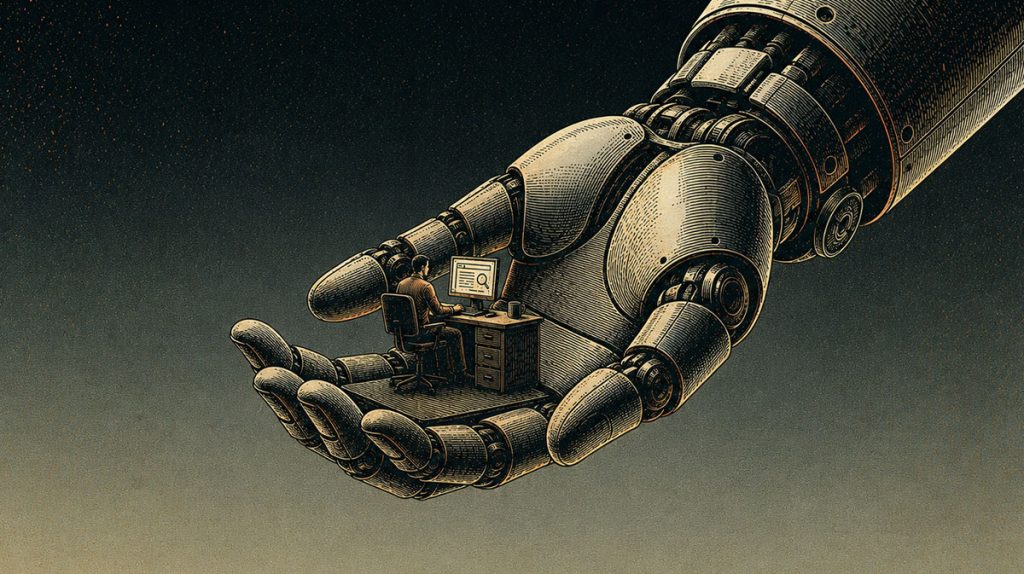
Consumers are increasingly turning to ChatGPT, Gemini, and Copilot for the messy, conversational, “talk to it like a friend” stage of the purchase journey — the part where they figure out what they actually want before they ever type a brand name into Google. For categories like beauty, where personal context matters and consumers crave guided recommendations, AI is rapidly becoming the place where consideration sets are formed and narrowed long before a brand has a chance to compete on shelf or on a search results page.
This rewires the funnel in ways most brand teams have not internalized. Brands have spent twenty years optimizing for SEO, getting onto the first page of ten blue links. AI changes the math entirely: an LLM might surface only three to five recommendations in response to a prompt, and the criteria for inclusion are opaque, dynamic, and increasingly personalized to the individual asking. Worse, agentic checkout is no longer hypothetical. This is where the consumer says “go buy the best electrolyte drink for me” and the AI does the research, picks the product, and adds it to cart. Major LLM platforms are projecting full agentic commerce capabilities within the next 6 to 12 months. If your brand isn’t in the recommendation set, the sale is already lost before the consumer ever sees a price tag.
There is also a trust gap to navigate. Consumers are taking AI recommendations seriously but they still validate against reviews, friends, and price‑checking. One bad AI recommendation can wholesale destroy a consumer’s trust in the model for an entire category. Brands have a narrowing window to influence what AI says about them and the products in their category through reviews, owned content, third‑party citations, and the unglamorous work of becoming the most semantically credible answer to the questions consumers are actually asking.
MARKETER TAKEAWAY
Add “How does AI talk about our brand?” to your weekly marketing dashboard. Audit your category prompts in three major LLMs every quarter. And start building the LLM equivalent of an SEO program. Like, yesterday.
TREND 5: Foresight Is Not a Luxury. It’s the Discipline That Decides Who Survives.
Eighty‑nine percent of the Fortune 500 from the 1950s no longer exist on that list. Half are out of business entirely.
In times of major technological shift, up to half of existing businesses are projected to disappear within five years. Against that backdrop, the standard insights operating model — answer the question I asked, validate the assumption I have, report on what already happened — is a structural liability for the brands that hire it. Reactive research is not insurance against disruption. It is a guarantee of being late to it.
Nestlé’s response has been to operationalize foresight as a discipline, not a side project. Their “2030 Decoded” initiative pairs PESTLE‑style scanning with always‑on AI signal tracking to identify the macro forces — economic K‑shaped bifurcation, AI‑delegated decisions, TikTok‑driven discovery, the GLP‑1 reshaping of food and beverage moments — and translate them into category trend reports for the next 12, 36, and 60 months. The output isn’t a forecast in the predictive sense. It is a structured way of provoking the future, identifying which signals to bet on and which to ignore, and giving cross‑functional teams a shared map of where the puck is going. The dividend shows up in everything from innovation pipelines to retailer conversations to brand‑level strategic planning.
The barrier to adopting foresight is rarely capability. It is courage. Insights teams are trained to demand 99% certainty before they will commit a point of view, which is exactly the wrong posture in a market where the cost of acting late dwarfs the cost of acting on imperfect information. As one Nestlé leader put it: the future isn’t something we predict, it’s something we provoke. CMOs who keep their insights teams locked into reactive reporting are paying for a rear‑view mirror in a car that’s accelerating.
MARKETER TAKEAWAY
Carve out 20% of your insights budget for foresight, and protect it from the urgent‑but‑not‑important crush of weekly tracker requests. If your insights team can’t articulate the three macro forces most likely to disrupt your category by 2030, you don’t have an insights team. You have a reporting function.
TREND 6: Trust Is Earned by Telling the Uncomfortable Truth
Fifty‑one percent of consumers worldwide do not trust major institutions.
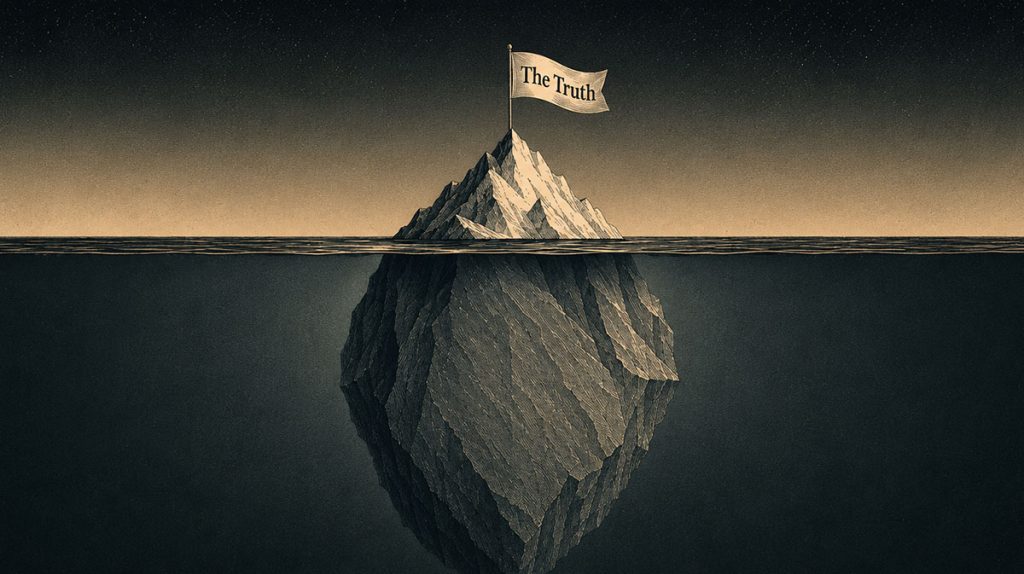
We are operating in what one industry leader termed the “Truth Abandonment Era” — a moment when sanitized stories, comfortable summaries, and culturally tone‑deaf research routinely lead brands into preventable disasters. The research industry has been complicit. Lived experiences get softened in reports. Cultural nuance gets stripped from briefs. AI models scale bias because they were trained on data that erased it. The result is brands making confident, well‑resourced decisions on a version of the consumer that doesn’t actually exist.
The brands breaking through are the ones doing the opposite.
- P&G’s Pantene Gold Series didn’t just tweak a formula. It confronted the truth that textured hair never lacked legitimacy, industry expertise did. From there, they rebuilt trust by matching capability to a lived reality.
- Aveeno commissioned over 1,800 real‑skin‑of‑color baby eczema images to fix a representation gap that had quietly excluded a generation of parents.
- Bad Bunny’s Super Bowl performance reached 135+ million viewers because Latino identity was centered, not adjacent.
Each of these is a research insight made commercial. Each was made possible because someone in the room had the courage to ask the questions that don’t fit on the standard brief: Who isn’t being seen here? What truth is being avoided? Are we telling the comfortable story, or the full one?
The same dynamic is playing out in real time around GLP‑1 medications, which have already created 141 million lost food and beverage occasions per day and are projected to be used by 20% of the population by decade’s end. Brands still doing GenPop reads as if this seismic behavioral shift is a fringe trend are missing the entire story. The winners are doing ethnographic work to understand how the GLP‑1 journey reshapes household routines, in‑store overwhelm, and what “happy” even looks like for someone whose hunger cues have been chemically rewritten. This is what cultural fluency looks like in practice. It is now a strategic moat, not a soft‑skill nice‑to‑have.
MARKETER TAKEAWAY
Make truth‑telling a line item, not an afterthought. Equip your insights and strategy teams to be cultural translators, not just analysts. And before any major creative ships, force your team to answer four questions:
1) Who isn’t being seen?
2) What truth is being avoided?
3) Who benefits from this version of the story?
4) Are we telling the full truth or just the comfortable one?
CONCLUSION: From Reporting Function to Strategic Conscience
The threads connecting these six trends are not subtle. The era of fast, cheap, surface‑level, rationalized consumer research as the default fuel for marketing decisions is ending. What is replacing it is messier, slower in some places and faster in others, requires more judgment from the humans in the loop, and demands more courage from the leaders signing the budget. The marketing leaders who get this right will be the ones who stop treating their insights function as a service desk and start treating it as their organization’s strategic conscience.
That requires three concrete shifts.
- First, demand that your insights team move up the value chain — from data hunters to knowledge stewards, from report producers to opinion formers, from validators of your assumptions to the ones telling you which of your assumptions are dangerously wrong.
- Second, audit your research stack with the assumption that some of it is broken. Bot‑contaminated panels, synthetic personas masquerading as ground truth, and trackers that only measure rational drivers are not edge cases — they are the new default unless you actively defend against them.
- Third, accept that the brands winning 2030 are already preparing for it today, while their competitors are still optimizing yesterday’s funnel.
The most quietly radical idea from the conference came from a former Barclays insights director: the future will belong to insight‑driven organizations that are customer‑centric and powered by evidence‑based decisions. The role of the CMO is to be the loudest, most uncompromising advocate for that future inside their company. Wait for the change to arrive and you become its victim. Shape it, and you become its architect.
The reckoning is here. The only question is which side of it your brand ends up on.

Brian Gee

Subscribe for
more Slant
This site is protected by reCAPTCHA and the Google Privacy Policy and Terms of Service apply.